


Rules in any industry reflect the assumptions of the people who wrote them. The rules that DraftKings and Bet365 operate by were written when fiat banking was the only viable payment infrastructure for a gambling platform, when points-based loyalty was the industry standard for rewarding regular players, when a game library of a few hundred titles was considered well-stocked, and when esports was a niche activity rather than a mainstream betting market.
Those rules produced good platforms for the player those assumptions described. They are producing increasingly inadequate platforms for the player those assumptions no longer describe.
ZunaBet launched in 2026 and operates by different rules. Crypto payments as the foundation rather than the addition. A game library built around provider diversity rather than commercial convenience. A loyalty program built around transparency rather than operator flexibility. A sportsbook built around the markets the 2026 player bets on rather than the markets the 2000 player did.
This article puts all three platforms side by side and examines what different rules produce in practice.
DraftKings: The Rules That Built US Market Dominance
The rules DraftKings operates by were written for a specific market at a specific moment. The US sports betting market opened state by state after 2018 and DraftKings was positioned to capture it faster than almost any competitor — an existing brand, an existing audience, and the operational infrastructure to move quickly as licensing allowed. The rules that produced that position were built around what the US regulated market required and what the US sports bettor expected.
The sportsbook those rules produced is genuinely strong for its market. American sports coverage reflects a platform that understands its audience deeply — NFL, NBA, MLB, NHL, and college sports structured around the betting culture that surrounds each of them. The app is reliable. In-play coverage works. Odds compete effectively within the US context.
The casino serves its supporting function. A reasonable library from established providers, live dealer content, standard table game variants. The product works for the player it was designed for.
The rules show their age in predictable ways. Fiat payment infrastructure built before crypto was relevant — withdrawals measured in business days rather than minutes. Bitcoin in select states as a concession to demand rather than a commitment to native crypto infrastructure. Dynasty Rewards points that convert to less cash value than headline tier descriptions implied for most players who calculate it carefully. Geographic operation bounded by licensed US states.
The rules worked for 2018. In 2026 they are increasingly the wrong rules for the player doing the research.
Bet365: The Rules That Built International Market Dominance
The rules Bet365 operates by were written over 25 years of focused investment in a single product category. The sportsbook those rules produced is the result — the most comprehensive market coverage available anywhere, in-play betting on events that other operators close before they start, a live streaming service embedded in the platform that lets players watch events as they wager. For the sports bettor who measures quality by range of accessible markets, Bet365 wrote the rules on what a sportsbook should be.

The casino developed alongside it. A large library, strong live dealer content, polished platform experience. The product reflects the investment of a platform that has had the time and resources to build broadly.
The rules show their age differently here. Geographic restrictions eliminate the platform for US players and several other significant markets — a rule written by regulatory circumstance rather than product choice but with the same effect. The loyalty rules deliver meaningful rewards at invite-only VIP tiers inaccessible to the general player base — a rule written for a time when opaque elite loyalty structures were considered aspirational rather than exclusionary. Crypto rules are minimal. Fiat payment rules apply throughout.
The rules worked for the era that produced them. In 2026 they produce a platform that serves a specific and established player profile well and an emerging player profile inadequately.
ZunaBet: The Rules Written for 2026
ZunaBet launched in 2026 under Strathvale Group Ltd, operating under an Anjouan gaming license and registered in Belize. The team brings over 20 years of combined industry experience. It is not a US licensed operator. It does not hold UK regulatory certification. It is a crypto-first, internationally accessible platform whose rules were written in 2026 for the player who exists in 2026.
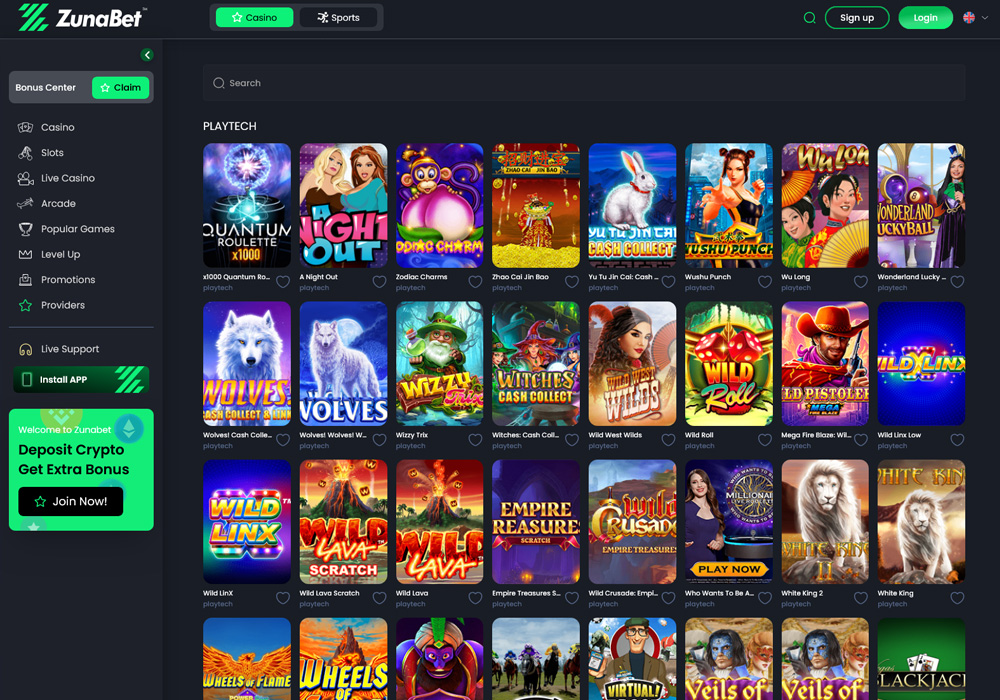
The game library rule is provider diversity over commercial convenience. ZunaBet carries 11,294 titles from 63 providers — a number that reflects a deliberate decision to build breadth at the supplier level rather than volume at the title level. Evolution for the full live dealer catalogue. Pragmatic Play across multiple categories. Hacksaw Gaming for high-volatility mechanics. Yggdrasil for distinctive design. BGaming for the crypto-native player’s aesthetic preferences. Sixty-three providers means sixty-three different creative philosophies producing content with different mechanics, different volatility profiles, and different visual identities. The rule produces a library that sustains long-term engagement because it has genuine variety rather than the impression of it.
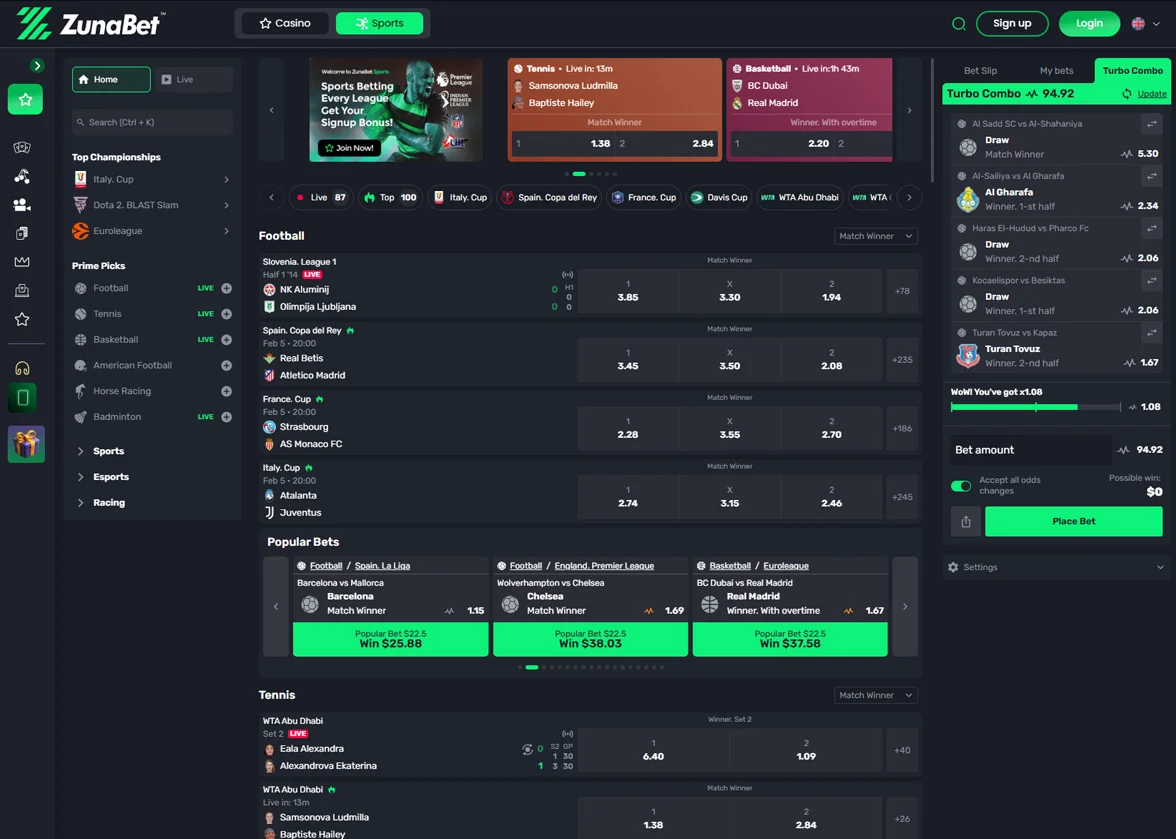
The sportsbook rule is coverage of the markets the 2026 player bets on. Football, basketball, tennis, NHL, and other major global sports alongside CS2, Dota 2, League of Legends, and Valorant as genuine primary markets. Virtual sports and combat sports complete an offering built around what the modern player’s betting activity actually looks like rather than what it looked like in 2000.
The payment rule is crypto-native infrastructure rather than crypto-adjacent fiat infrastructure. More than 20 cryptocurrencies supported natively — BTC, ETH, USDT across multiple chains, SOL, DOGE, ADA, XRP, and others. No platform processing fees. Withdrawals settling in minutes. Apps across iOS, Android, Windows, and MacOS with 24-hour live chat support.
The Payment Rules: What Different Rules Produce
The payment comparison between the three platforms is a direct comparison between the rules each operates by and the outcomes those rules produce.
DraftKings’ payment rules — built around fiat banking in the US regulatory context — produce withdrawal timelines of same-day PayPal at best and multiple business days bank transfer as standard. Bitcoin in select states does not change this because it is not processed by native crypto rules.
Bet365’s payment rules — built around fiat banking in its operating jurisdictions — produce similar timelines through bank transfer, card payment, and e-wallet options. The rules have been improved at the margin over 25 years but the fundamental architecture has not changed.
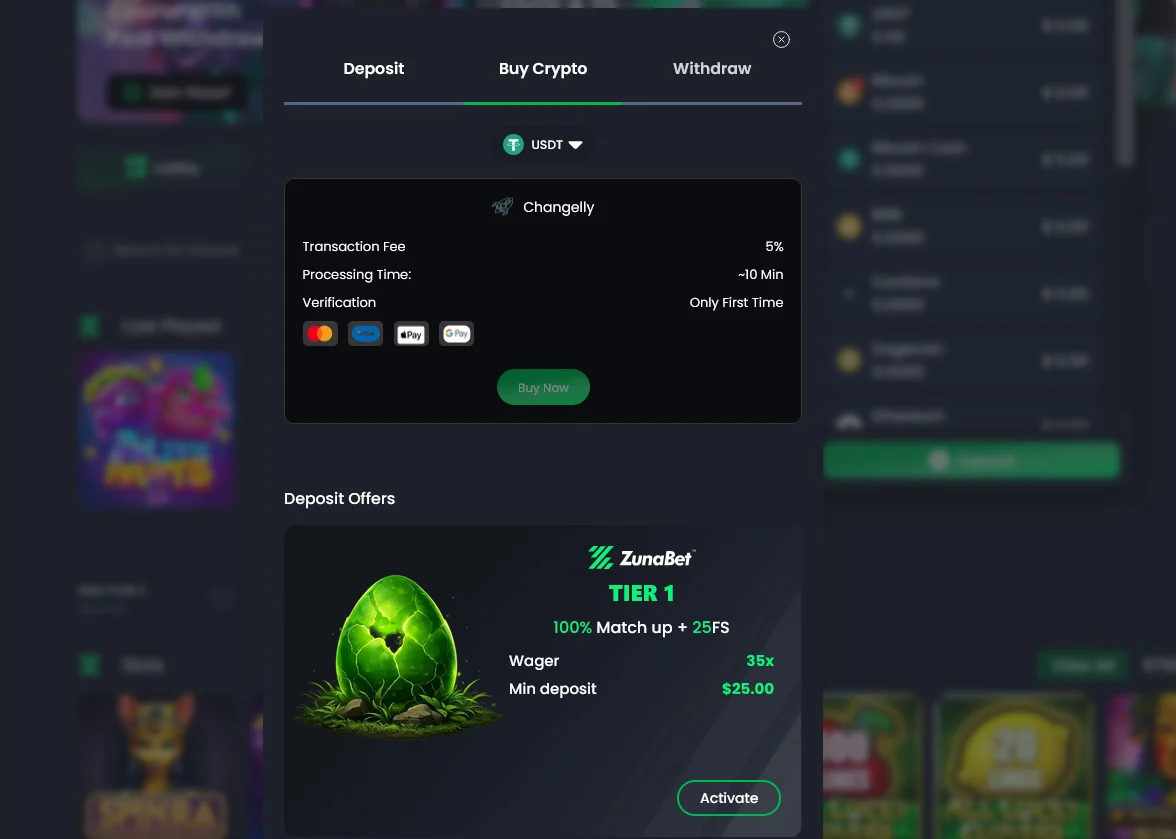
ZunaBet’s payment rules — built around native crypto infrastructure in 2026 — produce withdrawals that settle in minutes. Not because the platform has optimised a fiat process but because it operates by rules that do not involve fiat processing layers. Twenty-plus coins supported natively. No fees beyond standard network costs. The player receives their funds before the session memory has faded.
Different rules produce different outcomes. For the player whose payment expectations were written in an era of instant digital transactions, ZunaBet’s rules produce the only outcome that meets them.
The Loyalty Rules: What Different Rules Produce
The loyalty program comparison is equally a comparison between rules.
DraftKings’ loyalty rules — Dynasty Rewards points converting through a redemption structure — produce a system that most experienced players find delivers less actual cash value than the tier descriptions suggested when the maths is applied. The rules favour operator flexibility over player clarity.
Bet365’s loyalty rules — invite-only VIP tiers delivering meaningful rewards to a minority — produce a system that the general player base operates outside of. The rules favour the operator’s retention economics over the player’s ability to understand what their engagement earns.
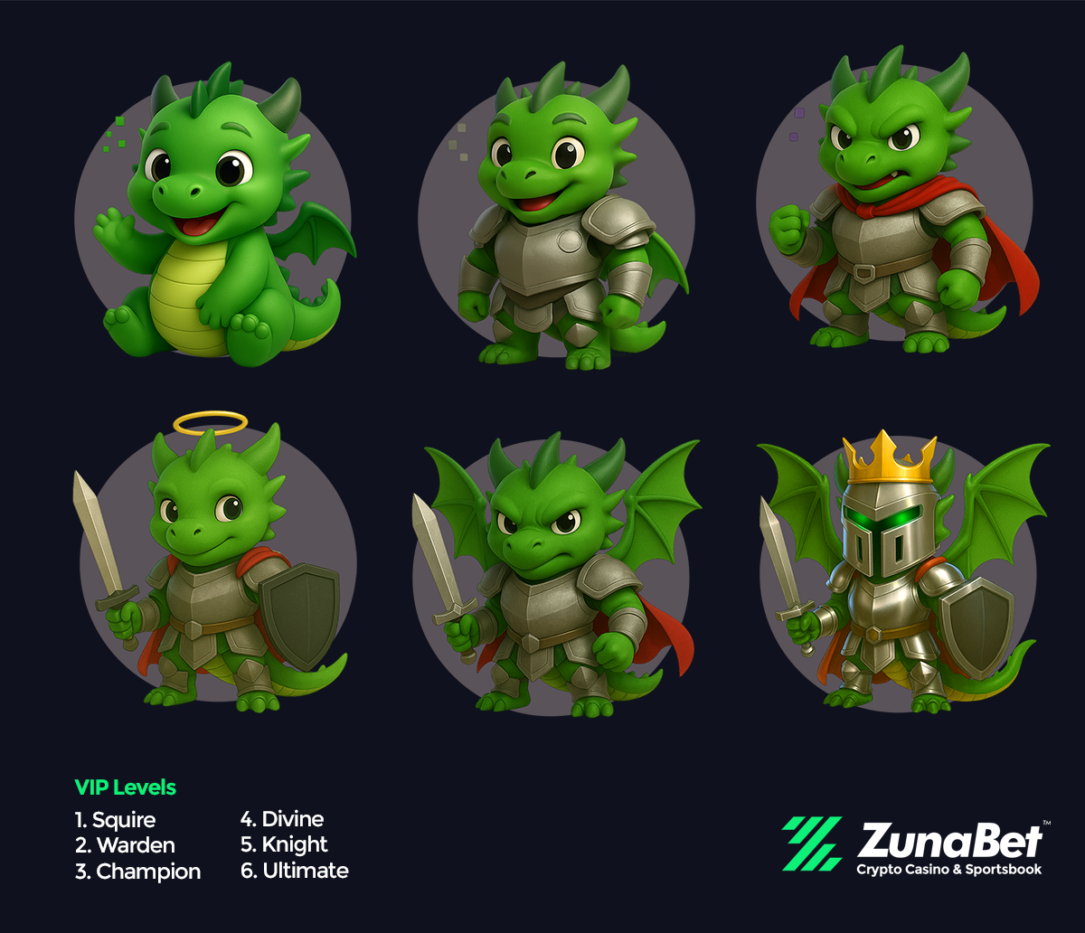
ZunaBet’s loyalty rules — direct rakeback rates stated clearly and applied consistently — produce a system where the player knows exactly what they earn before joining and receives exactly that throughout their membership. Six tiers — Squire, Warden, Champion, Divine, Knight, and Ultimate — with a gamified mascot called Zuno and rakeback rates of 1%, 2%, 4%, 5%, 10%, and 20%. All tiers open. All rates applying to all activity. No conversion. No invitation.
Twenty percent at the Ultimate tier. The rule is stated. The outcome is delivered. Additional tier benefits — up to 1,000 free spins, VIP club access, double wheel spins — build on a rule set that already favours player clarity over operator flexibility.
Different rules produce different relationships between platform and player. ZunaBet’s loyalty rules produce the relationship the 2026 player is actively looking for.
The Welcome Bonus
ZunaBet new players receive a bonus across three deposits totalling up to $5,000 plus 75 free spins. First deposit matched 100% up to $2,000 with 25 free spins. Second deposit matched 50% up to $1,500 with 25 spins. Third deposit matched 100% up to $1,500 with 25 spins.
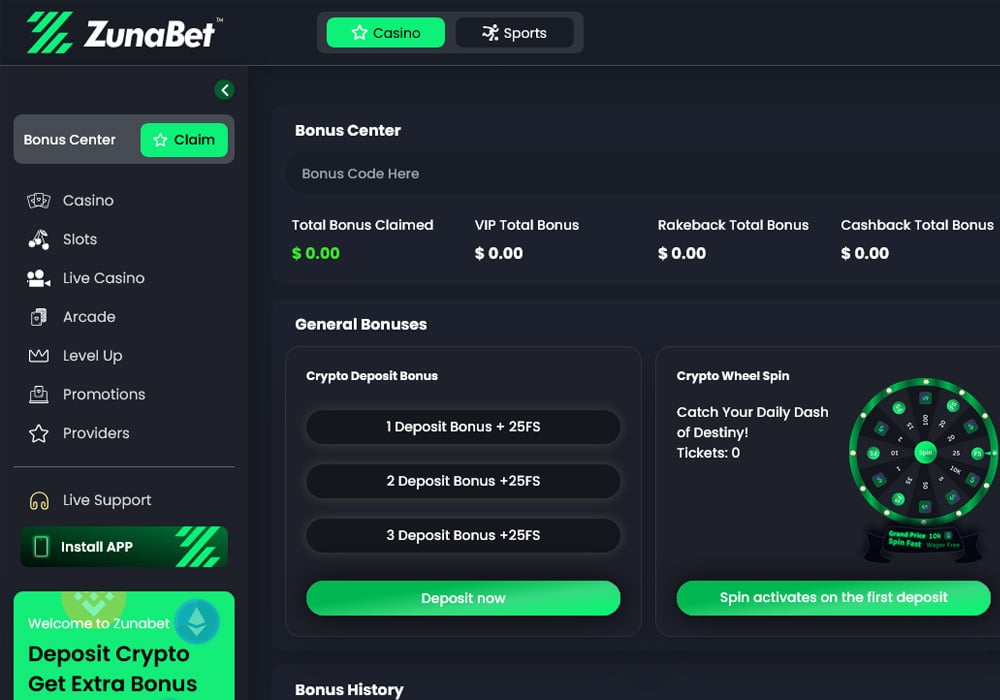
DraftKings and Bet365 offer welcome promotions within their regulated markets. Terms vary by jurisdiction and should be confirmed directly on each platform.
What Happens When You Compare the Rules Honestly
DraftKings and Bet365 wrote rules that produced market dominance in the eras they were building in. The rules were right for their moment and they continue to serve the players those moments produced. Neither platform is poorly built — both are well-built for the player they were designed for.
ZunaBet wrote rules for 2026. The crypto-native player. The esports bettor. The player who understands rakeback and will not accept opacity as a substitute for it. The player who expects withdrawals measured in minutes and will not accept days as the price of a recognisable brand.
ZunaBet launched in 2026 and its operational track record is still developing. That is the honest caveat and it belongs in any comparison. But when the comparison is between the rules that built yesterday’s dominant platforms and the rules written for today’s arriving player — the rules that matter most in 2026 are the ones ZunaBet operates by.