

Every industry has a moment where the established players are still winning but the future is clearly forming somewhere else. Online gambling hit that moment in 2026. Caesars and DraftKings remain dominant forces in the American market. Their revenues are massive. Their user bases are loyal. Their products function exactly as designed. And yet a growing number of players are asking a simple question — is this really the best it gets? ZunaBet, a crypto-first platform that launched in 2026, is giving those players a reason to believe the answer is no.
Caesars: The Weight of Legacy
Few brands in gambling carry the weight that Caesars does. The name evokes something specific — Las Vegas, high stakes, a particular kind of glamour that has been marketed for decades. When Caesars moved into digital gambling, that brand equity transferred instantly. Players trusted it before they ever opened the app.
The online sportsbook handles the American sports calendar without surprises. NFL, NBA, MLB, NHL, and college sports are covered solidly. Markets are standard. Odds are competitive without being industry-leading. Live betting exists and functions. The experience is professional and unremarkable in equal measure.
Casino gaming is present where state law permits. The selection of slots, table games, and live dealer content is serviceable. It gives players enough options for regular sessions without trying to overwhelm them with volume. Whether that restraint is a strategic choice or a limitation imposed by the regulated environment depends on your perspective.
Caesars Rewards continues to be the most interesting part of the package. The ability to turn online wagering into tangible real-world benefits — hotel rooms, restaurant reservations, concert tickets — is something no purely digital competitor can replicate. The program creates genuine stickiness for players who participate in the full Caesars ecosystem.
For purely online players who never walk into a Caesars property, the rewards program loses most of its unique value. What remains is a standard points-based system that does not differentiate itself from dozens of other loyalty programs in the digital gambling space.
Payments work the way payments work on every traditional US platform. Bank accounts, cards, approved e-wallets. Some methods are faster than others. None are instant. All require identity verification. The system is reliable in the way that a bus is reliable — it gets you there eventually without ever making you excited about the ride.
DraftKings: Innovation Within Boundaries
DraftKings built its brand on feeling different. The pivot from daily fantasy sports to a full sportsbook and casino operation was executed with the energy of a startup rather than the caution of an incumbent. The app is arguably the best designed in the US market. Updates roll out frequently. Features that competitors take months to copy appear on DraftKings first.
The sportsbook is the company’s strongest asset. The betting experience is fast and intuitive. Odds are sharp. Promotional creativity keeps the product feeling fresh — same-game parlays, flash odds boosts, and tiered free bet offers rotate constantly. For a player who enjoys actively working the promotional cycle, DraftKings makes that process easier and more rewarding than most competitors.
The casino product improves with each passing quarter but remains secondary to the sportsbook. Game counts are growing as new provider relationships come online and state regulators approve additional titles. The trajectory is positive. The current reality is a library that sits well below what players on globally focused platforms have access to.

Loyalty runs through the crown system. Wager, earn crowns, advance through tiers, unlock perks. It is a cleaner structure than most traditional comp-point models. The limitation is in translation — converting crown value to actual dollar returns requires a level of attention that most players will not invest. The system rewards engagement without making the payoff intuitively clear.
Payment infrastructure is identical to the rest of the regulated US market. Same methods. Same processing times. Same friction. DraftKings cannot move money faster than the banking system allows, regardless of how fast it moves everything else.
Why the Traditional Model Has a Hard Ceiling
Both Caesars and DraftKings are executing well within the system they operate in. The problem is the system itself.
State-level regulation creates a patchwork product. Every state that legalizes online gambling becomes its own separate market with its own rules. Game libraries differ between states. Bonus structures differ. Payment options differ. A platform that feels complete in New Jersey might feel half-built in another jurisdiction. Players do not experience one Caesars or one DraftKings — they experience whichever version their state allows.
The banking system imposes its own timeline on everything. Deposits through cards arrive quickly. Withdrawals through banks take their time. There is no technical reason a withdrawal should take three business days in 2026, but the infrastructure was not built for speed. It was built for compliance and risk management. Players pay for that in waiting time.
Game selection is governed by approval pipelines that move at regulatory speed rather than market speed. A new slot from a top provider can be live on a global platform within days of release. The same game might take weeks or months to clear the regulatory process in a US state. Players on regulated platforms are always playing catch-up on content.
Bonuses carry wagering requirements that shrink their real value significantly. A $1,000 deposit bonus sounds impressive until the 20x playthrough requirement reveals that $20,000 in wagers must be placed before any bonus-related funds become withdrawable. The headline number and the effective value are very different things.
These are systemic constraints. No amount of investment from Caesars or DraftKings changes them. They can optimize within the boundaries. They cannot remove the boundaries.
ZunaBet: Starting Where Others Hope to Eventually Arrive
ZunaBet did not enter the market to compete on the same terms as Caesars and DraftKings. It entered to demonstrate what becomes possible when those terms do not apply. Owned by Strathvale Group Ltd, operating under an Anjouan gaming license, and led by operators with more than 20 years of experience across the gambling industry, ZunaBet launched in 2026 with a product that resets expectations.
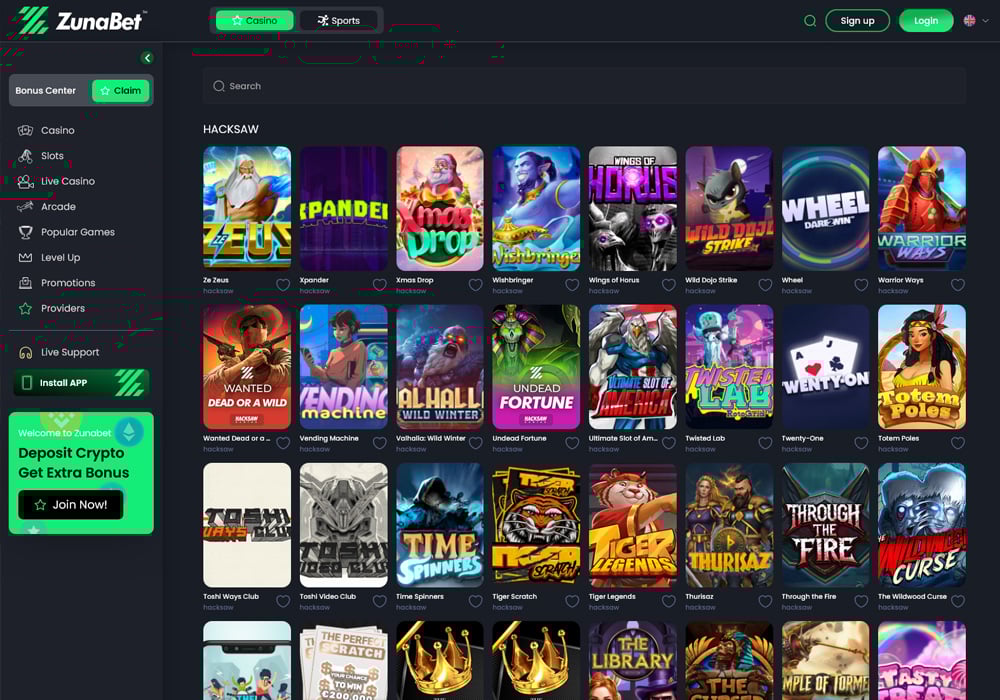
The game library is staggering in scale. ZunaBet went live with 11,294 games from 63 providers. Pragmatic Play, Hacksaw Gaming, Evolution, Yggdrasil, BGaming, and a deep roster of additional studios supply a catalog that covers every major category — slots, RNG table games, and live dealer games in full. There are no jurisdiction-based restrictions filtering what individual players can see. The complete library is available to everyone equally.
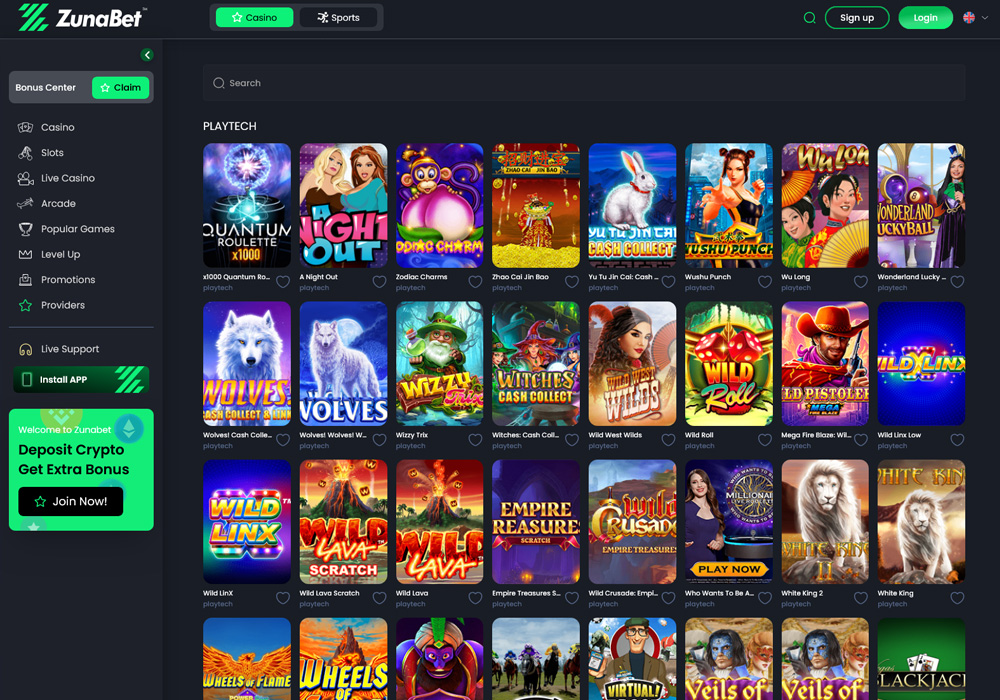
That volume matters for more than just bragging rights. Eleven thousand games means players discover new titles for months or years without repetition. It means niche preferences are catered to alongside mainstream tastes. It means providers compete for player attention inside the platform, which drives quality upward across the board. US-regulated platforms operating with a few hundred to a couple thousand titles simply cannot replicate that dynamic.
Crypto payments underpin everything. Over 20 cryptocurrencies are supported — BTC, ETH, USDT across multiple chains, SOL, DOGE, ADA, XRP, and beyond. The platform does not charge processing fees. Withdrawals move at blockchain speed rather than banking speed. Players hold their funds in their own wallets until the moment they choose to play and receive them back shortly after they stop. No intermediaries hold the money. No business hours gate the transaction. No conversion between crypto and fiat is necessary.
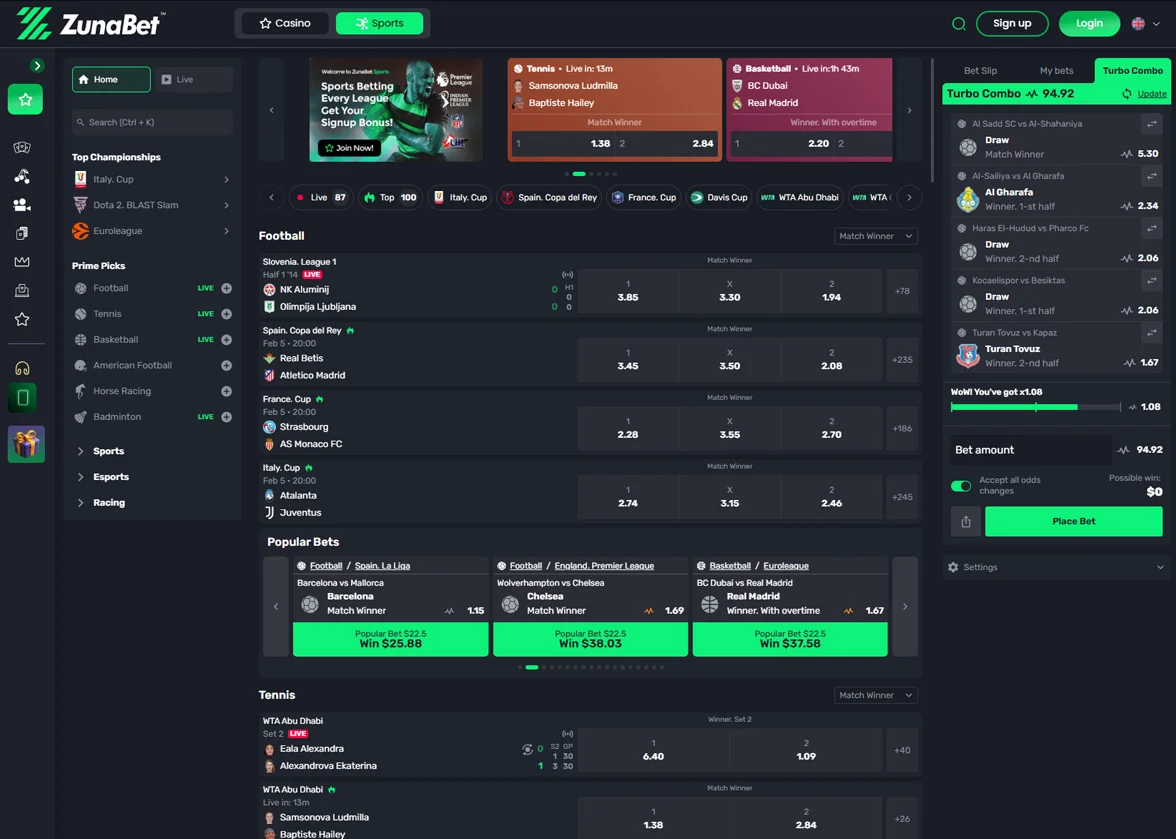
The sportsbook carries the depth of a platform where betting is the primary product, even though it shares the stage with over 11,000 casino games. Football, basketball, tennis, NHL, and other mainstream sports receive thorough market coverage. The esports section treats CS2, Dota 2, League of Legends, and Valorant as first-class betting markets rather than afterthoughts. Virtual sports and combat sports provide additional variety. Players handle all of their gambling activity — casino and sports — through one account funded by one crypto wallet.
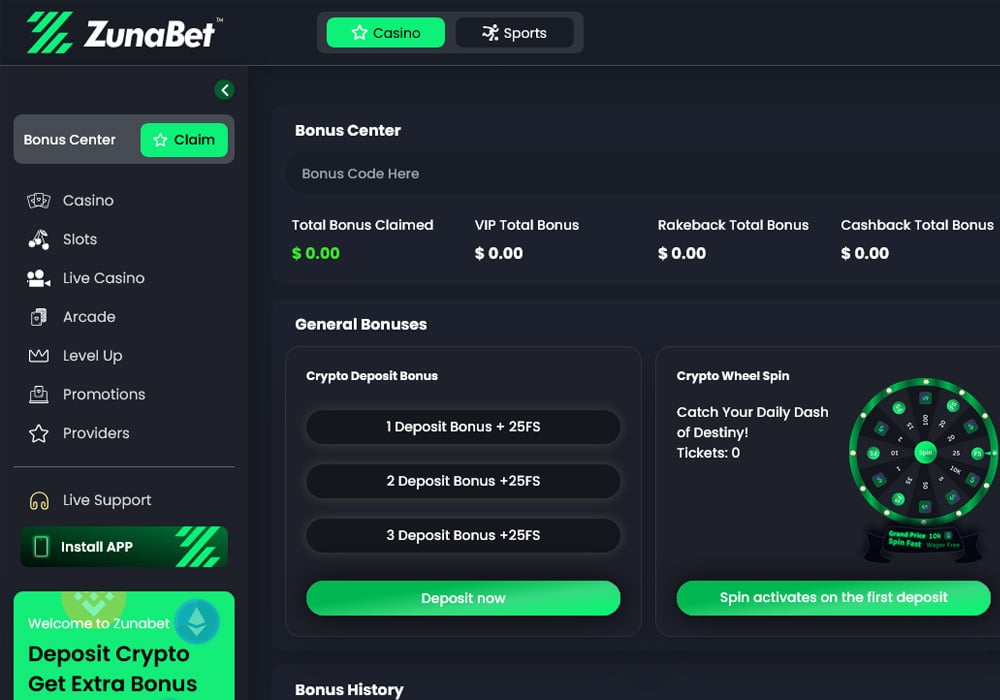
The welcome package delivers up to $5,000 plus 75 free spins over three deposits. First deposit gets 100% up to $2,000 with 25 spins. Second deposit gets 50% up to $1,500 with 25 spins. Third deposit gets 100% up to $1,500 with 25 spins. Structured across three deposits, the bonus sustains player engagement over multiple sessions rather than creating a single spike of value that disappears immediately.
Apps cover iOS, Android, Windows, and MacOS. The interface is dark-themed, responsive, and fast loading. Support through live chat runs every hour of every day.
The Zuno Dragon System: Loyalty That Respects the Player
The problem with most loyalty programs is not that they fail to reward players. It is that they make it unnecessarily difficult to understand what the reward actually is. Caesars wraps loyalty into a physical property ecosystem that most online players will never fully use. DraftKings wraps loyalty into a crown system that requires calculation to interpret. Both approaches obscure the central question every player has — how much am I getting back for my play?
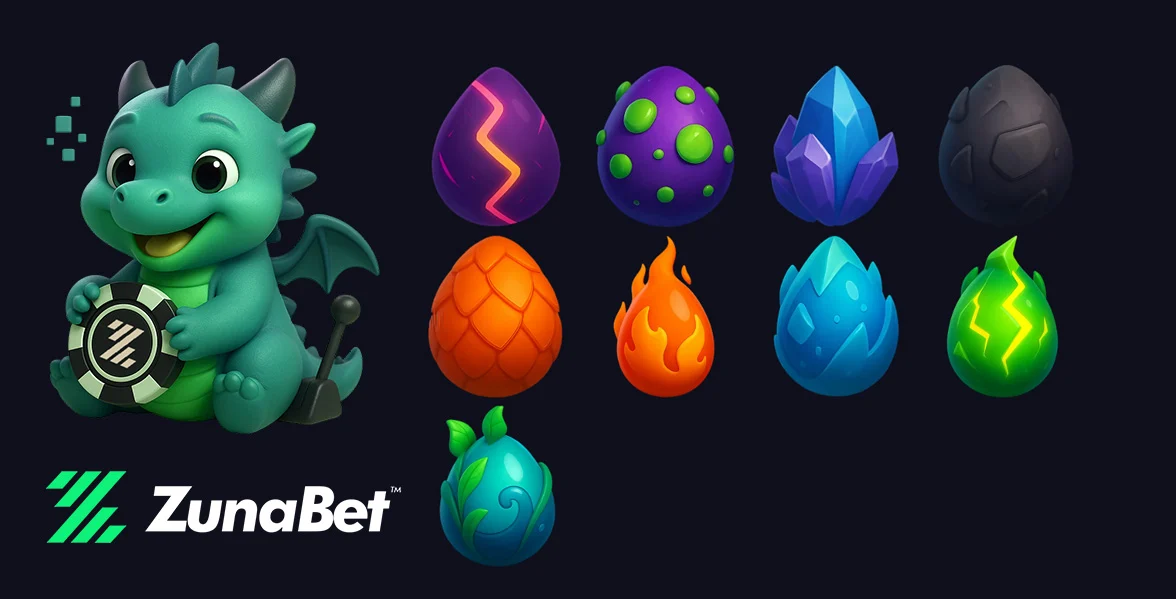
ZunaBet built its dragon evolution loyalty system around Zuno specifically to answer that question without any ambiguity. Six tiers. Six published rakeback percentages. Full visibility from the moment a player visits the site.
Squire tier gives 1% rakeback. Warden gives 2%. Champion gives 4%. Divine gives 5%. Knight gives 10%. Ultimate gives 20%. On top of rakeback, each tier unlocks free spins that scale up to 1,000 at the highest level, VIP club membership, and double wheel spins.
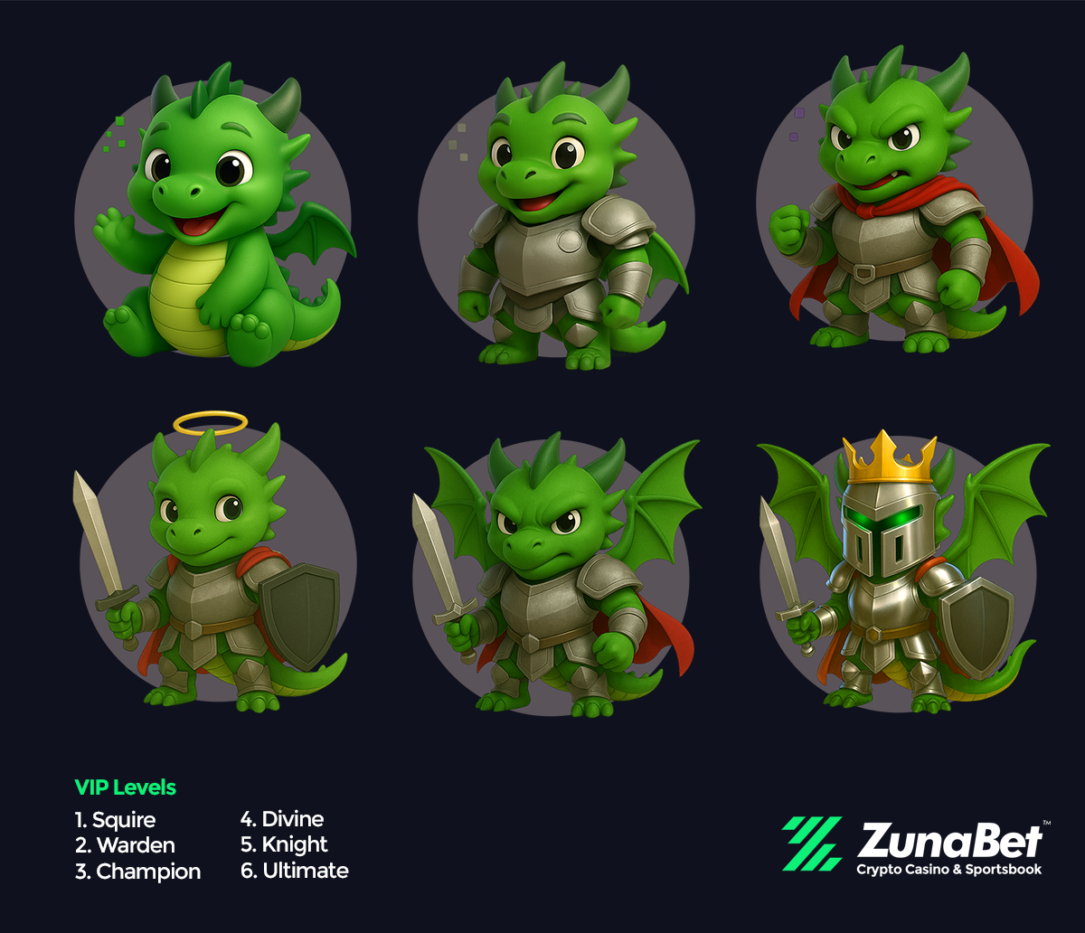
Nothing about this structure is hidden. A prospective player can examine the entire progression, understand exactly what awaits at each stage, and make an informed decision before committing any funds. That sounds like a low bar, but in an industry where opacity is the norm, it qualifies as genuinely different.
The 20% rakeback ceiling at Ultimate tier deserves specific attention. That is a published, guaranteed return on wagering activity that no major traditional platform offers in comparable form. For regular players, 20% rakeback is not a nice extra sitting in the background. It is a significant financial factor that reduces the effective cost of playing by a meaningful margin over time.
Two Models, One Clear Direction
Caesars and DraftKings are excellent at what they do. Caesars connects digital gambling to a physical empire that creates unique experiences. DraftKings pushes the boundaries of product design and promotional engineering within the American regulated market. Both companies will continue to thrive in their lanes.
But neither company can offer what ZunaBet offers. Not because they lack the talent or the resources, but because the system they operate within does not allow it. A US-regulated platform cannot launch with 11,000 games overnight. It cannot process withdrawals in minutes through crypto. It cannot publish a loyalty structure that pays 20% rakeback across a transparent tier system. The regulatory and financial infrastructure prevents it.
ZunaBet operates outside those constraints. That carries its own considerations — lighter regulation means players should evaluate risk differently, and a new platform has not yet built the long operational track record that established brands carry. Those factors are real and worth weighing.
What is also real is the product. Over 11,000 games. Over 20 cryptocurrencies. A complete sportsbook with genuine esports coverage. No payment fees. Fast withdrawals. And a loyalty program that tells players exactly what they earn at every level, all the way up to 20% rakeback at the top.
The established brands built today. ZunaBet is building tomorrow. And for a growing number of players in 2026, tomorrow already looks better.